
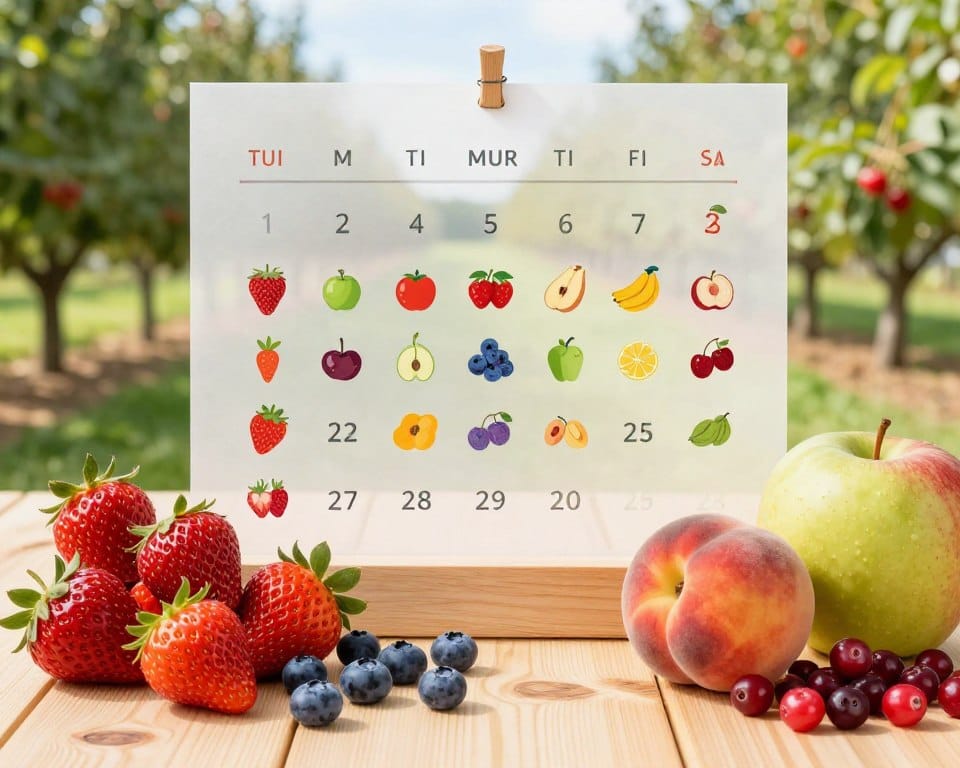
Quick answer: A simple fruit calendar northeast usa shows peak harvests by month — July is the high point for cherries, peaches, and a big variety at farm stands.
I write this guide from my years visiting markets and talking to growers. I built it from extension advice and USDA timing so you get practical, local-friendly timing you can use today.
Expect variation by state, elevation, and coastal vs. inland spots. I explain typical harvest windows for key produce and why timing shifts from year to year.
How I made this guide: I compared farm-stand timing with extension notes (Cornell) and USDA data to make a usable month-by-month chart. This helps you buy better produce and waste less 😊
Takeaway: Think early summer for berries and cherries, mid-summer for peaches and melons, and fall for apples and grapes — and expect local shifts.
Key Takeaways
- July is the peak month for many crops in this region.
- Timing varies by microclimate and year; use the guide as a smart starting point.
- I used USDA and Cornell extension data for practical accuracy.
- Shop local farm stands in season to get the best quality and price.
- Save or freeze excess to reduce waste and enjoy produce year-round.
Quick answer: what’s in season for fruit in the Northeast right now
Currently, the season opens with strawberries in late spring, moves into cherries and early berries in early summer, and then hits full swing by mid-summer. Think of the timeline as windows—not single dates—so you can shop smart as availability shifts by weather and place.
How to use this at market, CSA, and grocery
At the farmers market: ask “When was this picked?” and favor same-day or next-day picks. If a stand smells sweet from two feet away, it’s usually peak—buy extra to freeze.
For CSA members: plan add-ons around peak months. Order berries for July freezing and apples for October sauce so you save time and money.
In grocery stores: look for local labels and short supply chains. Local bins with small stickers often mean fresher produce and better value than long-shipped items.
Why peak season tastes better and costs less
When harvests peak, growers have abundance. That cuts transport time and cost, so quality climbs while prices often drop.
- Quick snapshot by season: spring—strawberries; early summer—cherries and early berries; mid-summer—blueberries, raspberries, peaches; fall—apples, pears, grapes; winter—mostly shipped citrus.
- Rule of thumb: piled-high and fragrant = peak. Stock up then.
- Practical example: July stands commonly feature cherries and peaches; tomatoes tend to peak late July into August.
- Smart swaps: frozen berries, applesauce, or citrus when fresh options are off-season.
fruit calendar northeast usa by month
Each month brings a new harvest rhythm across the region — here’s a simple, copy-ready chart to plan visits and meals. I kept windows realistic so you can book a picking weekend or stock the freezer.
Spring window
- Strawberries: late May–June — short and sweet.
- Early stand finds depend on warm springs.
Early summer window
- Cherries: peak in July.
- Other berries start showing up fast.
Mid-to-late summer window
- Blueberries: July–August.
- Raspberries: July–September.
- Peaches & plums: July–September; melons July–October.
Fall window
- Apples, pears, grapes: July–October, into October for many varieties.
- Cranberries join later in fall.
Winter options
Winter supplies rely on shipped citrus from warmer states — great for variety but not local.
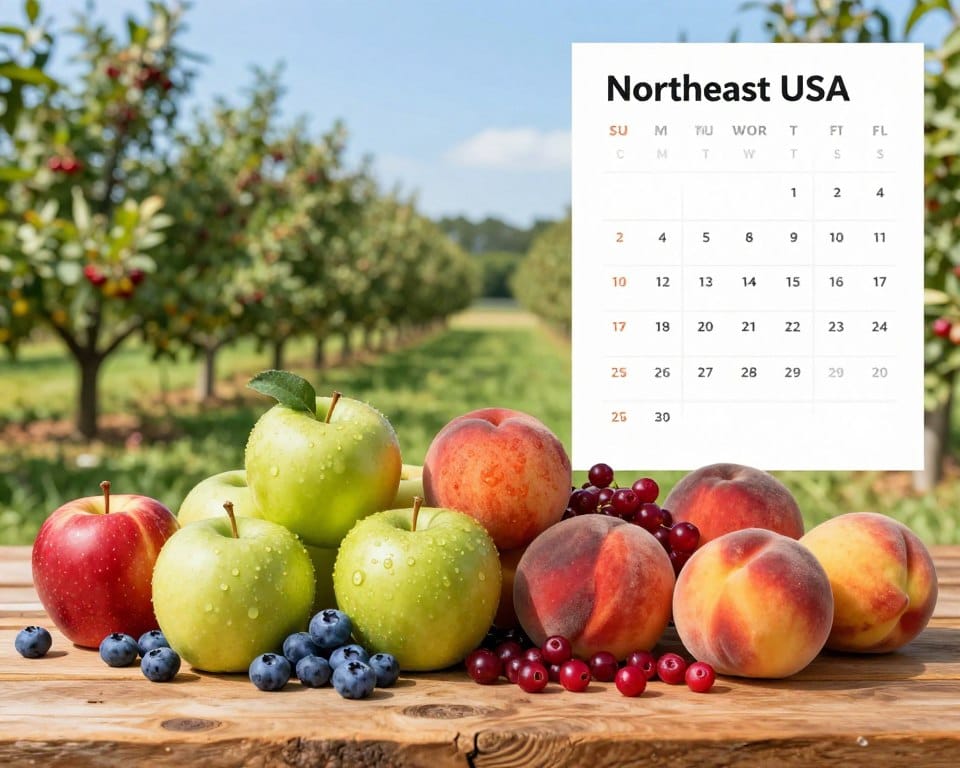
“Timing varies — coastal farms often ripen earlier; higher elevations run later.”
| Month | Common picks | Typical window |
|---|---|---|
| May | Strawberries | Late May–June |
| June | Strawberries, early berries | June–July |
| July | Cherries, blueberries, raspberries, peaches | July–Aug/Sept |
| Aug | Blueberries, peaches, melons | July–Oct |
| Sept–Oct | Apples, pears, grapes | Aug–Oct |
| Nov–Mar | Shipped citrus, stored apples | Winter months |
Note: Timing can shift with weather and elevation. Coastal spots often peak earlier; mountain orchards may run later.
Want a quick guide to what’s ripe right now? Check this helpful guide for picking timing: what’s in season now.
Summer peak harvest in the Northeast: July through September
July through September is the sweet spot—this is when growers have the widest variety and the best flavor. I visit stands in July and notice a clear shift: more local picks, fresher scent, and lower prices.
What shows up at farm stands in July
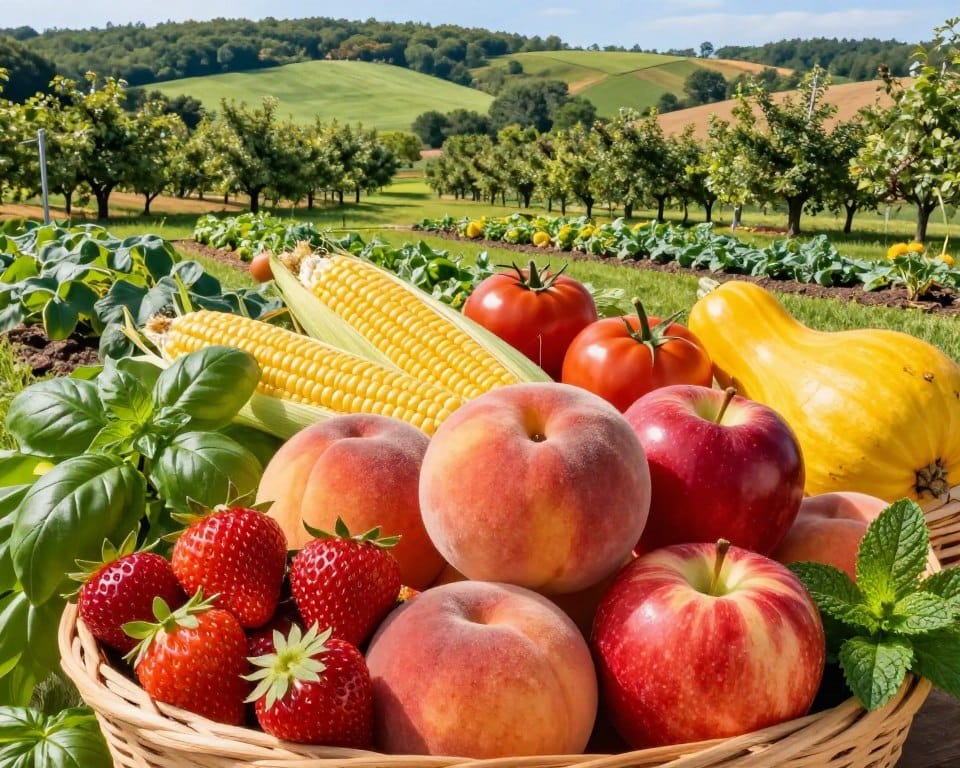
- July mixes: cherries, peaches, raspberries, and tomatoes — great for snacks and quick desserts.
- Pick-by-date matters: ask when something was picked and whether it was cold-stored.
Common July–October overlaps
- Expect apples, cucumbers, eggplant, melons, onions, and potatoes to overlap between July and October.
- This window makes one-stop shopping easy—plan salads, salsas, and grills around those picks.
Stone fruit and berry timing
- Peaches: July–September; plums arrive in late summer.
- Blueberries: July–August; raspberries: July–September.
What to expect as September starts
September brings grapes, pears, and early apples. I use this shift to swap peaches for apples in recipes.
Quick checklist for the stand: ask the pick date, the variety name, and whether produce was cold-stored. Plan to eat peaches right away and save apples for later storage!
For a fast reference on what’s ripe now, see what’s in season now.
Fall and winter produce that pairs well with Northeast fruit
As the air cools, markets shift toward cozy produce that plays nicely with late-season apples and pears. I love quick combos that feel fresh but cook in under 30 minutes.
Early fall crossover picks
In early fall you can still find ripe tomatoes and eggplant alongside crisp apples and pears. Use those overlaps to bridge summer meals into fall.
- Weeknight combo: roasted eggplant + quick apple salad with lemon and parsley.
- Simple swap: tomato + peach bruschetta shifts to tomato + pear once peaches fade.
After-frost flavor boost
Many crucifers—kale, cabbage, cauliflower, and Brussels sprouts—taste sweeter after a frost. This is a common, well-supported kitchen tip from cooks and growers.
- Sautéed kale with apple slices and a splash of vinegar.
- Roasted cauliflower and grapes for a sweet-savory side.
- Pan-roasted Brussels sprouts with a handful of chopped apples.
Cold-season standbys & easy shopping list
Winter stands still stock hearty favorites: leeks, turnips, beets, onions, parsnips, and winter squash. These store well and turn simple meals into warming dinners.
- Shopping list: leeks, turnips, beets, onions, parsnips, squash, apples, pears.
- Meal idea: roasted squash + apple slices, served with sautéed greens.
“After a frost, many crucifers taste sweeter—a small change that lifts fall and winter cooking.”
Seasonal shopping tips for better flavor, value, and less waste
A few simple habits at market save money, boost flavor, and cut waste all season long. I use quick checks and small storage rules to stretch harvests and keep produce tasty.
Quality checks by type
- Berries: dry, plump, and fragrant—no mush or mold on the container.
- Stone fruit (peaches, plums): smell sweet at the stem and yield slightly to gentle pressure.
- Apples & pears: apples feel firm; pears ripen by variety—test near the stem.
- Grapes: tight clusters and firm skins; avoid shriveled berries.
Storage times that matter
- Eat berries first (2–4 days refrigerated).
- Stone fruit next—use within 3–5 days or ripen on the counter then refrigerate.
- Apples keep longest—store in a cool spot for weeks if needed.
Batch cooking & preserving ideas
- Freeze berries flat on a tray, then bag for smoothies.
- Make quick peach compote—simmer with a splash of lemon and freeze in jars.
- Cook grape-forward freezer jam when grapes peak.
- Roast extra zucchini and summer squash; freeze in meal-size packs.
Simple recipe pairings
- Strawberries + rhubarb for a bright crisp.
- Peaches + basil on toast or with ricotta.
- Apples + roasted squash with sage and walnuts.
- Pears + kale salad with toasted almonds.
Regional variability—what to expect
Coastal spots warm earlier while higher elevations run later. Rain shortens berry shelf life; a cold snap can delay stone fruit. I check local extension notes before planning a big pick (see Cooperative Extension guidance).
“Peak-season produce often has better flavor and can cost less due to local abundance and fewer transport costs.”
Buy plan by month: pick berries and peas early to eat or freeze; save apples and pears later for storage. For spring ideas see fresh spring picks.
Sources: USDA seasonal guidance and Cooperative Extension recommendations support these practical tips.
Conclusion
Save this guide and use it before each market run—I do the same every year. It helps you buy when local harvests are abundant and taste is best.
Keep the month chart handy, check farm-stand signs, and confirm origin labels. Small timing shifts happen across the region—ask the grower if you’re unsure.
Practical habit: plan one “preserve it” week during peak berries and one “apple storage” week in fall. These two moves cut waste and stretch flavor through the year.
Want local picking timing? See this quick guide for Ohio timing: season timing by pick window.
Final takeaway: use the guide, shop peak, store smart—and enjoy simple, delicious meals with seasonal fruits and vegetables. 😊
Leave a Reply