
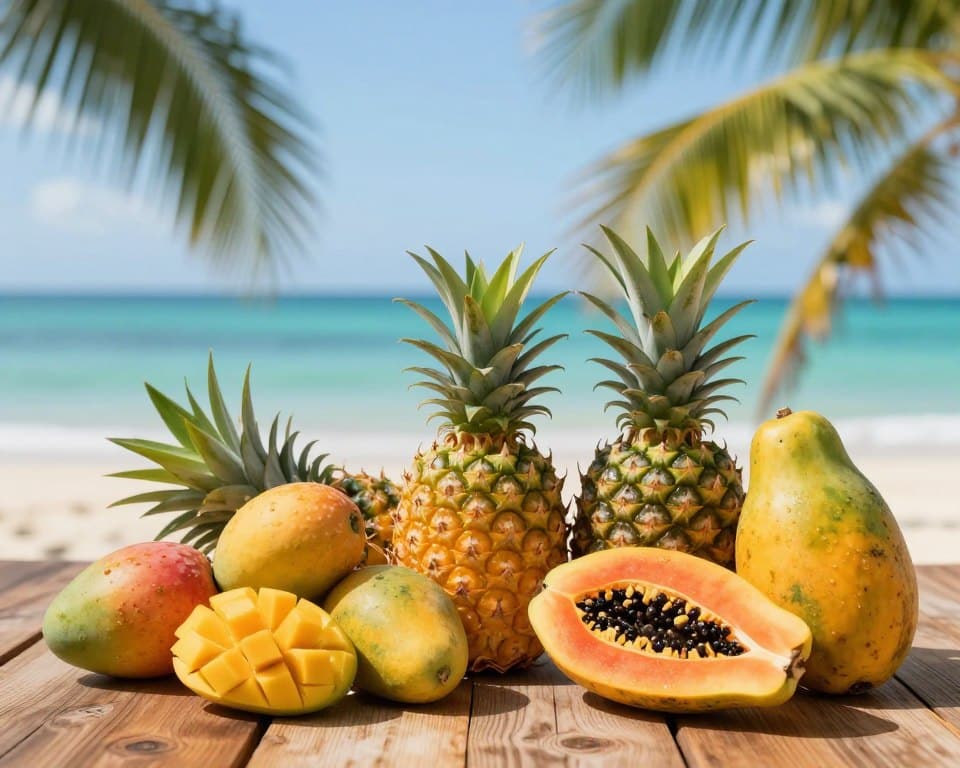
I love how caribbean fruits in season summer smell—sweet, tangy, and sun-warmed. I’ll show what you can find in U.S. stores, Latin and island markets, and farmers markets.
I’ll preview the top picks: mango, guava, passion fruit, soursop, pineapple, coconut, guinep (mamoncillo), and papaya. Expect quick tips on ripeness cues, safe handling, and storage.
Timing shifts by island and microclimate—Jamaica and Nevis give different windows. I’ll offer plan-around examples so you know when to buy, what tastes best, and how to use each fruit at home.
Look out for a simple seasonality snapshot and fast meal ideas—smoothies, juices, and baked treats. For a deeper mid-summer guide, see this handy reference on what to buy in July: what’s in season in July.
Key Takeaways
- I highlight which tropical fruits show up at U.S. markets and how to spot ripeness.
- Shopping tips focus on Latin and island market finds plus farmers market picks.
- Timing varies by island—expect differences between places like Jamaica and Nevis.
- Practical storage and safe cut-fruit handling keep fruit fresh and safe.
- You’ll get quick uses: smoothies, fresh juices, and simple baked desserts.
Quick answer: the best Caribbean fruits to buy in summer
Here’s the quick take: mangoes, pineapple, guinep, passion fruit, and early guava are the top buys right now. These deliver the best balance of sweet and bright flavors for fresh eating, juicing, or baking.
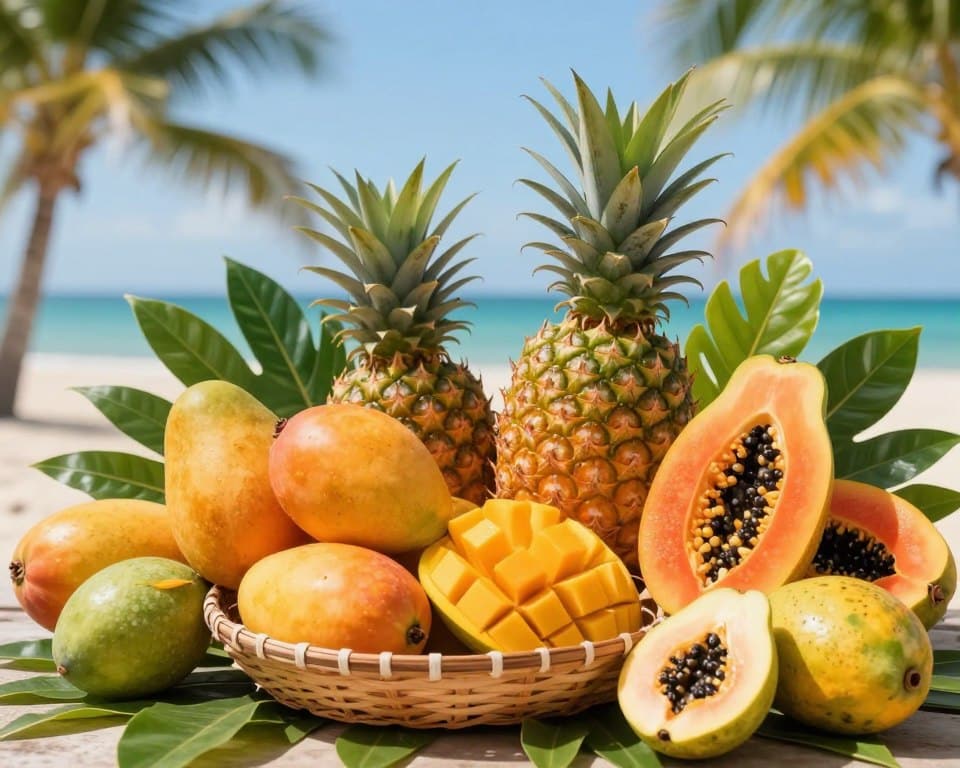
What “in season” means and why flavor peaks
“In season” simply means harvest windows when produce hits markets fast from the farm. That short time-to-market boosts sugar/acid balance and aroma.
When a fruit reaches its peak, it smells stronger, the texture is right, and it needs less cold storage or long shipping — that equals better taste on the day you buy it.
Fast shortlist for U.S. shoppers
- Look for country labels — Jamaica mangoes peak in May–June but run from April to late summer.
- Guava often shows up July–November; guinep is common June–August.
- At Latino or specialty stores, pick slightly fragrant mangoes, firm pineapples with a sweet nose, and taut-skinned guinep.
Buy this now: fresh eating — ripe mango; juicing — passion fruit or guava; baking — firmer pineapple. Quick checks take ten seconds in the aisle.
For a helpful July reference, see what’s in season in July.
Caribbean fruits in season summer: peak picks and what they taste like
Mangoes
When it peaks: Jamaica starts in April, peaks May–June, and runs into late summer. Taste and texture: lush, sweet, floral flesh with a silky texture. Best uses: fresh, smoothies, salsas. U.S. tip: pick slightly fragrant mangoes; ask for varieties if the vendor knows them—Jamaica and Nevis boast dozens of varieties.
Guava
When it peaks: roughly July–November. Taste and texture: sweet-tart balance; pink or white pulp with edible seeds. Best uses: juice, preserves, snacks. U.S. tip: choose fragrant, slightly soft guava for fuller flavor.
Passion fruit
When it peaks: summer months broadly. Taste and texture: tart-sweet, seedy pulp. Best uses: juices, cocktails, desserts. U.S. tip: buy heavy, slightly wrinkled fruit for stronger aroma.
Soursop
When it peaks: widely available mid-year. Taste and texture: spiky skin, creamy custard-like pulp. Best uses: smoothies and chilled drinks. U.S. tip: look for fruit that yields to gentle pressure but isn’t brown inside.
Pineapple
When it peaks: Jamaica harvest often May–July. Taste and texture: bright, sweet-tart flesh with a firm bite. Best uses: grilling, baking, fresh. U.S. tip: smell the base for sweetness and press for a slight give.
Coconut
When it peaks: year-round staple. Taste and texture: crisp coconut water and firm flesh. Best uses: drinks, desserts, cooking. U.S. tip: choose whole fresh coconuts for flesh; buy bottled coconut water for convenience.
Guinep (mamoncillo)
When it peaks: often June–August. Taste and texture: tart-sweet, slippery pulp around a large seed. Best uses: snack straight from the shell. U.S. tip: watch kids around the big seed—spit or discard it safely.
Papaya
When it peaks: common through warm months. Taste and texture: soft, sweet flesh; peppery seeds. Best uses: breakfasts, smoothies, juices. U.S. tip: pick slightly soft papayas with a sweet aroma.
Seasonality snapshot by island and timing (examples you can plan around)
I’ll lay out quick island timing so grocery runs and recipes line up with harvests. Use these examples as guides, not guarantees.
Jamaica — a practical example
Example: mangoes start in April. The peak runs May–June and can stretch to late summer. Guinep commonly shows June–August. Lychee often follows mango flows on local trees.
Nevis — festival and varieties
Nevis grows more than 40 mango varieties and hosts a Mango Festival in early July. That makes the island a great place to see variety and peak harvests.
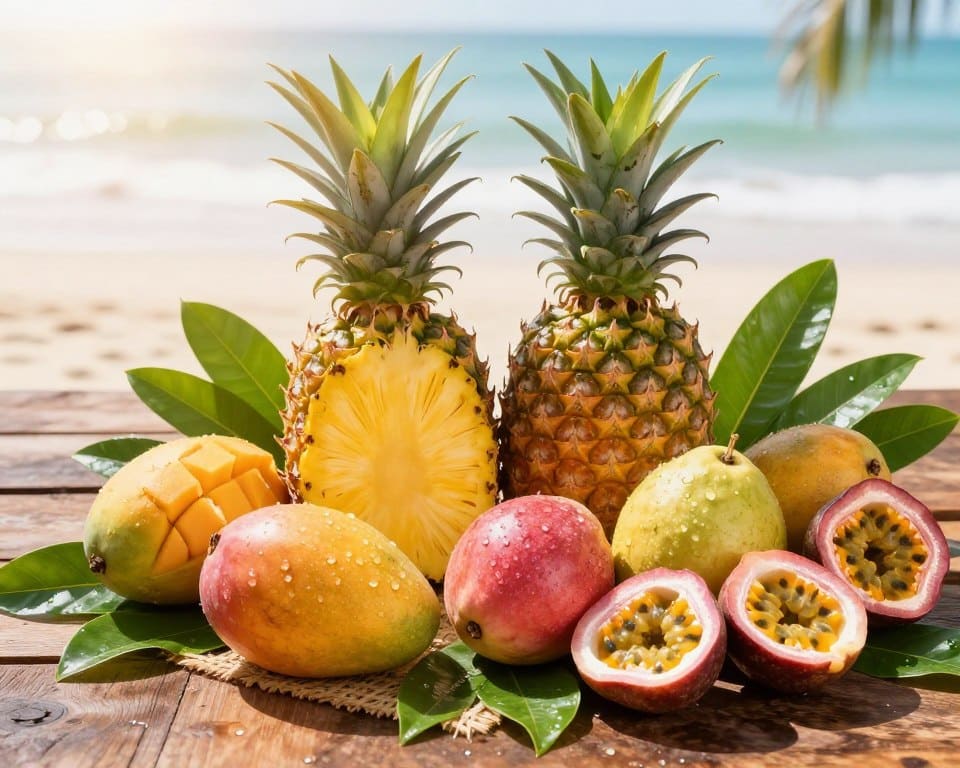
| Fruit | Example island | Typical peak months | Best uses |
|---|---|---|---|
| Mango | Jamaica (example) | May–June | Fresh, smoothies, salsas |
| Guinep | Jamaica (example) | June–August | Snack |
| Passion / Pineapple | Nevis / Jamaica | Mid-year | Juice, baking |
Quick planning tips:
- Check origin labels — if it says Jamaica, expect peak mango volumes in late spring/early summer.
- Some fruit trees and fruit trees can bear more than once, so use this as a guide.
- Plan a market trip the week of known peaks for the best price and flavor.
How to buy, prep, and store tropical fruit safely at home
A simple market-style check—smell, squeeze, look—keeps you from hauling home underripe or mushy fruit. I show quick cues and safe steps you can use the same day you shop.
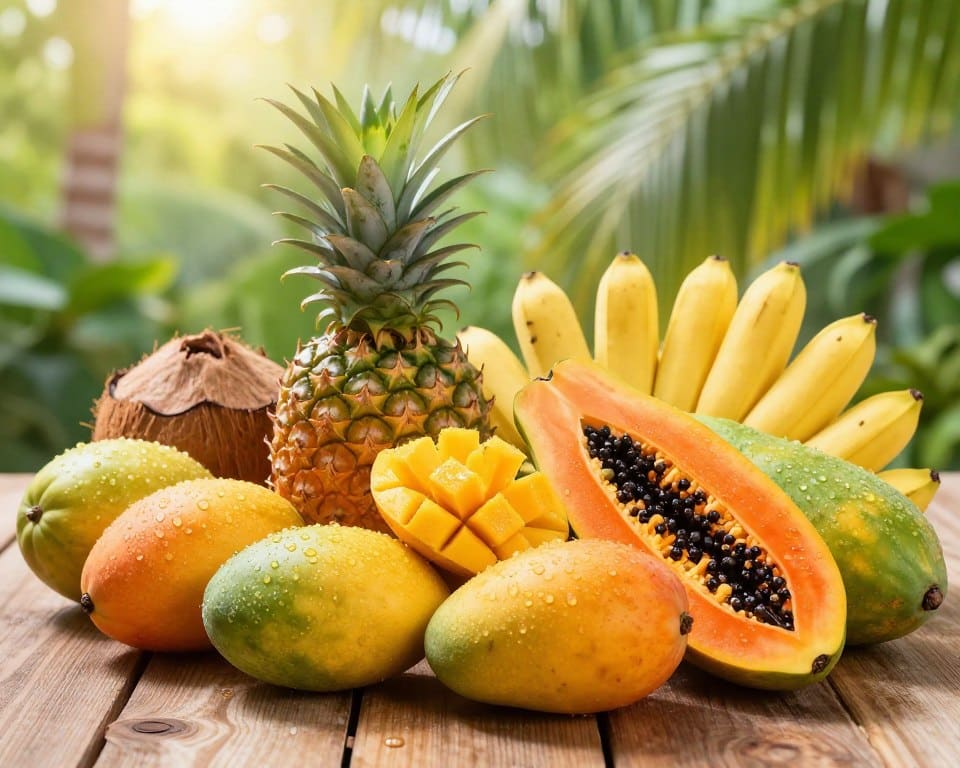
How to judge ripeness by smell, feel, and color
Smell: Mango and pineapple should give a sweet, tropical aroma at the stem end. If it has no scent, wait a day.
Feel: Look for a slight give—too firm means chalky flesh; too soft means overripe and mushy. Use your palm, not just fingertips, to judge texture.
Color: Trust color changes for some varieties, but not all—learn the variety. Skin can darken and still be fine.
Food safety and cut-fruit handling basics (U.S. kitchens)
- Wash hands and rinse whole produce under running water before cutting (FoodSafety.gov / FDA.gov).
- Sanitize boards and knives; refrigerate cut fruit within two hours—one hour if above 90°F (USDA FoodKeeper guidance).
- Store ripe fruit in sealed containers; counter-ripen first when needed, then chill to slow sugar loss and preserve flavors.
- Beware of large seeds (guinep, papaya)—they are a choking hazard for small children; remove or supervise at snack time.
- Treat opened coconut water as a perishable beverage—refrigerate and use quickly (USDA FoodKeeper).
Quick checklist: check aroma, press gently, wash, cut on a clean board, and refrigerate cut pieces the same day. Simple steps keep food tasty and safe!
Ways to eat Caribbean summer fruit: drinks, breakfasts, and desserts
Bright, chilled drinks and warm, fruity desserts are my go-to ways to enjoy ripe tropical produce. I keep ideas simple for U.S. kitchens—short steps, easy swaps, and clear taste notes.
Juices and smoothies: guava juice, mango nectar, and soursop blends
- Guava juice: blend 2 cups pulp + 1 tbsp lime + 2 cups water/ice; strain if desired.
- Mango nectar-style: 1 ripe mango + 1 cup water + splash lemon; use frozen or canned purée if fresh is scarce.
- Soursop smoothie: 1 cup pulp + 1 cup milk or coconut milk + ice; sweeten only if needed.
Desserts and quick breakfasts
Breakfast ideas: papaya bowls with lime, mango with yogurt, and coconut granola toppers—quick and fresh.
- Pineapple muffins: use chunks—bakes at 350°F for 18–22 minutes; bright and tart.
- Mango muffins/quick bread: fold soft mango into batter; yields creamy, sweet bites.
- Bread pudding: use very ripe fruit to add moisture and deep flavor—warm, custardy, comforting.
Party idea: set a DIY tropical bar with labeled bowls, spoons, and a seed warning for kids. Use ripe fruit first and add a bit of sugar only if the taste calls for it—keep the fruit front and center!
Conclusion
Let’s wrap up with a few clear buying and cooking steps you can use this week.
Core takeaway: buy mangoes and pineapple early this season, expect guinep mid-summer, and plan for guava later when origin labels show it. These picks give the best flavor and texture and often cost less when supply is high.
This week: choose two fruits to eat fresh, pick one to blend into drinks, and save one to bake into a simple dessert.
Handle them safely—wash produce, use clean boards, and refrigerate cut fruit promptly.
Fruit seasons mark time for many island communities and are part of local culture and home remedies—consider that context, not medical advice.
Check origin labels, shop seasonally, and let ripeness guide your menu.
Leave a Reply