
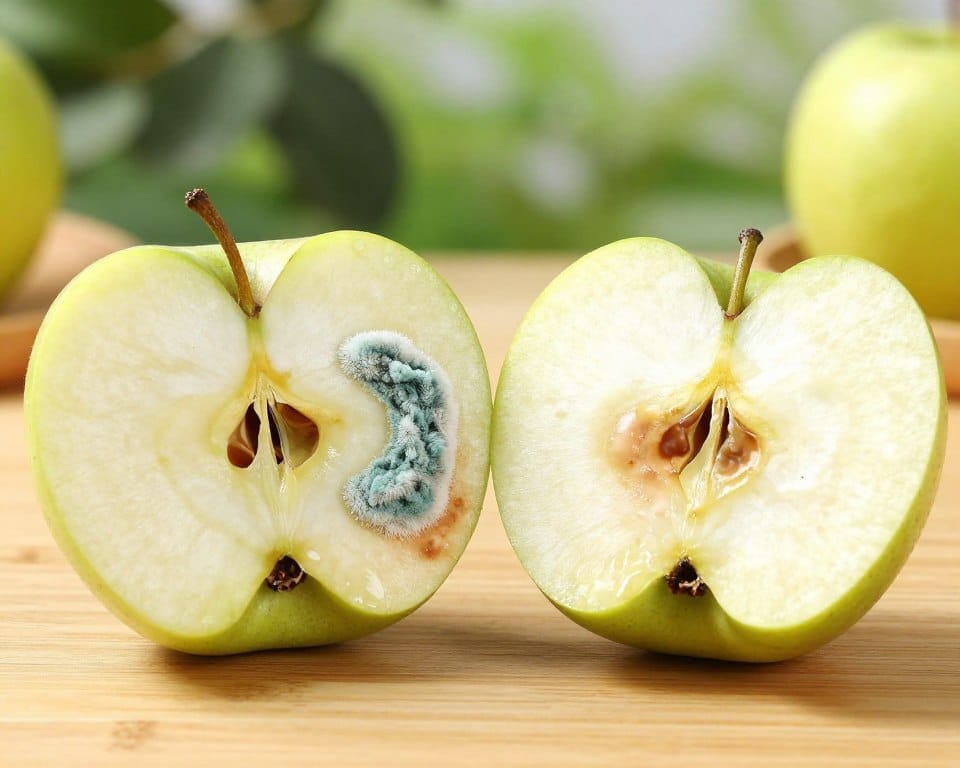
Quick answer: The simplest rule I use is this — bruises stay inside the fruit; mold grows on the surface and spreads. I say that first so you can decide fast at the store or when you open the fridge.
I touch and look for texture, color, and how the soft spots behave when pressed. A bruise often feels squishy but stays localized. Surface growth, fuzzy patches, or powdery spots mean a colony has started and will keep spreading; that usually means toss it.
I focus on real kitchen checks you can do in seconds: press gently, cut to inspect the inside, and check nearby produce for cross-contamination. Keep in mind that humidity and air exposure speed problems — fridge drawers matter! 😊
Safety note: For soft produce with visible surface growth, I discard rather than trim. Better safe for kids and family.
Key Takeaways
- Bruises are internal and usually safe to cut away if the flesh smells normal.
- Surface growth spreads — discard soft items with visible colonies.
- Check texture, color shifts, and nearby exposure to reduce spoilage.
- Use fridge drawers and quick inspections to keep produce fresh longer.
- When in doubt, throw it out — food safety protects your family.
Quick answer: how to tell a bruise from mold in under a minute
A fast scan — look, press, and smell — tells me whether to keep or toss.
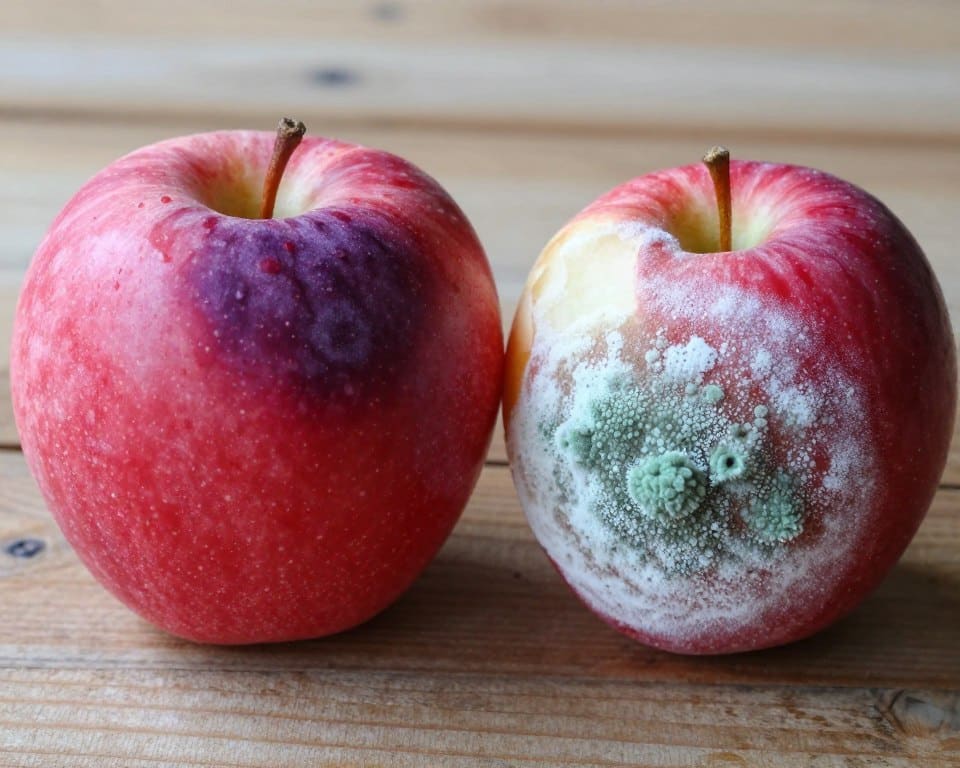
How bruising appears on common produce
Look: a dull patch or dark spot under intact skin. It stays localized.
Touch: soft but not fuzzy. The flesh yields; skin stays whole.
Examples I use: apples show brown areas, peaches dent and darken, bananas blacken at impact, and berries go mushy fast.
How surface growth shows and why trimming can fail
Look: fuzzy, powdery, or web-like growth on the skin. That is active growth from spores.
Smell: a musty or sour hint often accompanies visible colonies.
Soft items can hide deeper threads below one visible patch. For that reason, experts say to discard soft produce with visible growth (see USDA FoodKeeper and FDA guidance).
When in doubt: safety first
- 60‑second scan: 1) look, 2) press, 3) sniff — then decide.
- Be extra cautious if you are pregnant, elderly, a young child, or immunocompromised.
- Avoid eating berries, cut pieces, or damp mixes that show any surface colonies; toss them.
“Discard soft produce with surface growth; do not simply trim it.”
Hands-on checks for signs of fruit mold vs bruising
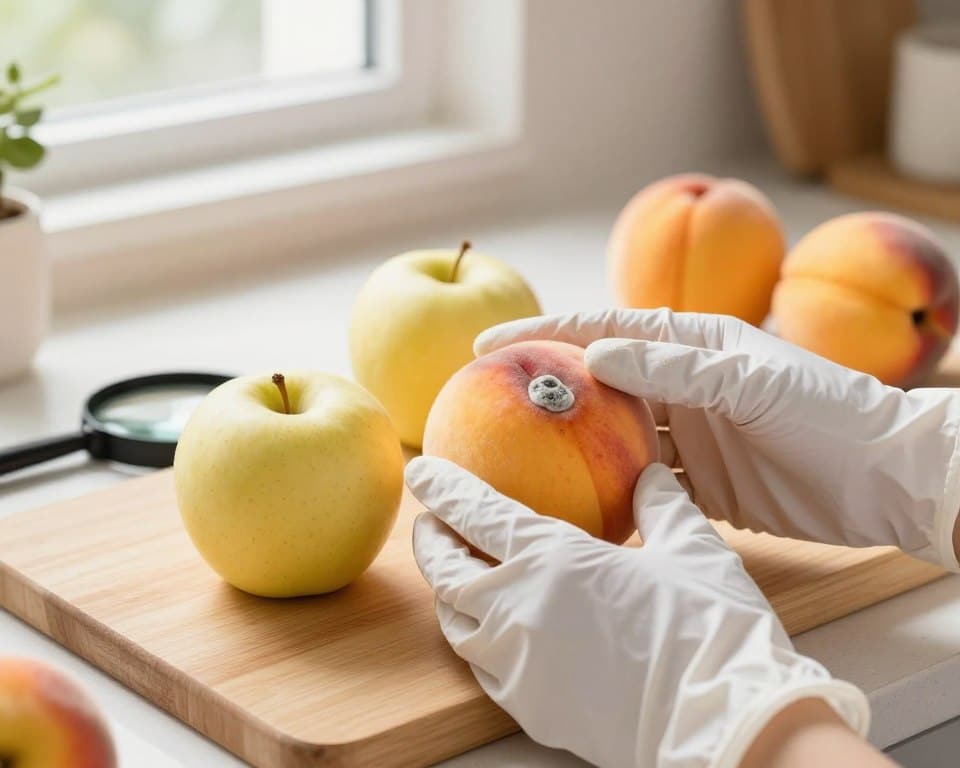
Start at the sink with good light and a clean knife — that routine tells the whole story fast. I show a quick process you can do before anyone eats.
Process test — what to watch:
- Process timing: bruising darkens soon after impact. Growth spreads outward over hours to days.
- Surface check: look for fuzzy filaments or powdery dusting — that is active spores and surface growth.
- Press test: a tight, soft dent usually means a bruise; a wet, collapsing patch that breaks skin signals spoilage.
- Cut test: slice to map the layer depth — brown localized tissue points to bruising; threads or watery rot point to microbial breakdown.
- Containment check: one isolated spot is easier to manage than multiple colonies across the area.
| Result | Action | Example |
|---|---|---|
| Firm bruise only | Keep or trim | Apple with small brown patch |
| Small surface spot | Trim and cook | Firm peach with tiny powder |
| Soft + colonies | Discard | Berries with spreading threads |
Quick clean-up: wash board and knife with hot soapy water to avoid cross-contamination. For more tips, see how to tell if strawberries are.
Why bruising happens: oxidation, enzymes, and color change
Damage plus air starts a quick chain reaction that changes tissue color. I say that because a bruise is chemistry—not a living colony.
Bruising is a chemical reaction, not growth
Think simple: cells break, their contents mix, and enzymes act. The result is a dark or blue stain inside the tissue. That stain is a reaction, not a spreading organism.
Oxygen exposure triggers enzymatic browning
When oxygen meets released enzymes, compounds in the plant change. An apple cut turns brown for this exact reason. Cold slows the process, but it doesn’t undo the chemistry.
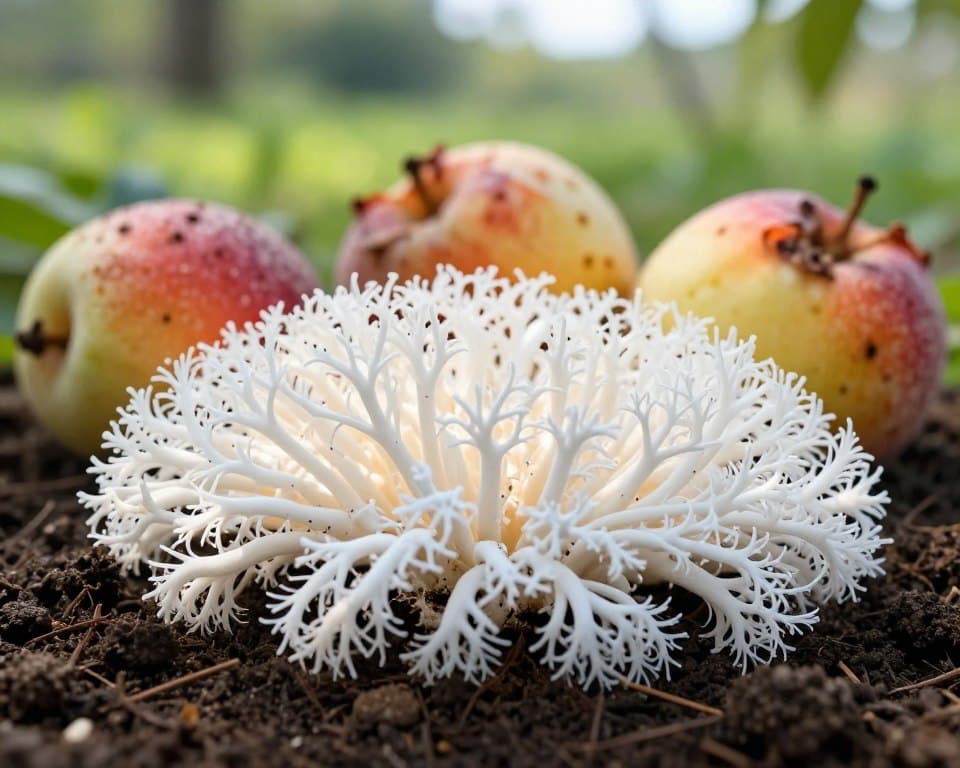
What “mycelium” means and why it matters
Mycelium is the thread-like body of fungi. Its presence means living growth on the surface. A stain that stays inside is not mycelium. So texture matters—fuzz on top = growth; an internal mark = a reaction.
When bruises look green or blue
Some pigments and plant compounds make stains look green or blue. Lighting and tissue chemistry change perceived color. In mushrooms, mycelium can also bruise blue fast when cut—again due to enzymes meeting oxygen, not new species moving in.
“Damaged tissue plus oxygen often equals rapid color change—look for texture to tell if it’s growth.”
| Cause | How it looks | What to do |
|---|---|---|
| Enzymatic oxidation | Internal brown/blue stain | Trim or eat if firm and smell normal |
| Mycelium (fungal growth) | Fuzzy threads on surface | Discard soft items; clean nearby produce |
| Pigment reaction | Green/blue hue | Check texture; if firm, trim and cook |
For more on how different forms appear and to compare whole categories, see aggregate vs multiple fruit guide.
Mold and contamination patterns you can recognize at home
Mold often begins at a single damaged spot and then fans out as spores ride air currents and find damp patches. I use that rule to spot early contamination fast.
Spore-driven spread
One tiny area can seed wider growth. Spores float in the air and land where moisture stays. That creates a patch that grows outward in rings or fuzzy clusters.
Common household colors
Blue-green and black are common. Color alone won’t tell you safety. Texture and a musty smell show active presence.
Humidity, air, and other conditions
Warm air, trapped moisture, and high humidity speed growth. Clamshells, sealed bags, and damp towels create ideal conditions.
- Food-safety line: soft items should be discarded when colonies appear; firm items can be trimmed if the layer is shallow and the area is solid.
- Dry before storage, vent containers, and keep the fridge cold.
Cross-contamination and cleanup
Check nearby pieces, wipe the drawer, and wash containers with hot soapy water. For more handling tips, see how to tell if strawberries.
“Discard soft produce with visible colonies; clean nearby areas to stop spread.”
| Where found | What to do next | Why |
|---|---|---|
| Single piece | Discard or trim firm layer | Limits contamination |
| Shared container | Discard container contents; clean | Spores spread easily |
| Fridge drawer | Remove items; sanitize | High humidity fuels growth |
For growers: bruising vs mold contamination in mushroom cultivation
Grower-only: this section is for people cultivating mushrooms. Skip if you’re reading about produce at home.
I watch texture and transfer first. Color changes happen fast in mycelium after handling. That can be simple oxidation or a real contamination event.
Mycelium bruising basics
Physical damage plus air often causes a blue or blue-green stain. This reaction involves compounds like psilocin in psilocybin mushrooms. The tissue stays thread-like and not powdery when it is just bruising.
Trichoderma and green colonies
Trichoderma often starts white and then shows emerald-green spores. Early growth can mimic healthy mycelium but feels fluffier. If it expands on the substrate, isolate and discard the block.
Penicillium vs true tissue discoloration
Penicillium leaves powdery or velvety patches. A stained patch that does not flake or leave dust is likely bruising. Feel it gently to check whether threads or powder come away.
The Q‑tip swab test
- Use a clean swab and gently wipe the colored area.
- If green/blue transfers to the swab, that suggests spores and contamination.
- No transfer points toward enzymatic staining—still handle with care.
Cobweb risks and quick containment
Cobweb mold looks wispy and can flood a fruiting chamber within 24–48 hours in still air and high humidity. Improve fresh air exchange and drop humidity if you spot thin, floating growth.
Prevention checklist
- Sterile technique: clean hands, gloves, and limited talking over open containers.
- Airflow: maintain gentle FAE to stop stagnant pockets.
- Substrate care: pasteurize or sterilize and discard suspect blocks promptly.
“Isolate suspect tubs and disinfect tools immediately to limit contamination spread.”
| Observation | How it feels | Q‑tip result | Action |
|---|---|---|---|
| Blue/green stain on threads | Dry, fibrous | No color transfer | Monitor; keep in clean air, trim if needed |
| Fluffy white then green | Soft, marshmallow-like | Green on swab | Isolate and discard substrate |
| Powdery blue-green patches | Dusty, leaves residue | Color on swab | Remove and sanitize area |
| Wispy, fast-spreading growth | Thin, hovering strands | Often transfers | Improve FAE; discard heavily affected blocks |
Conclusion
Conclusion
I start with what I can see and touch—texture first, then a small cut if I need clarity. Bruising is an internal stain in intact tissue; growth sits on the surface and can spread across nearby bodies and areas.
Remember the quick checks: fuzzy surface, wet breakdown, spreading pattern, and what a cut reveals. Those tell you whether to keep, trim, or toss.
Safety first: don’t trim and eat soft produce with surface colonies—discard and clean the area. For storage and shopping, handle gently, keep items dry, and chill promptly to slow both bruising and growth.
With a few calm steps you can waste less and keep your family safe. For more handling tips, see how to tell if strawberries are.
Leave a Reply