
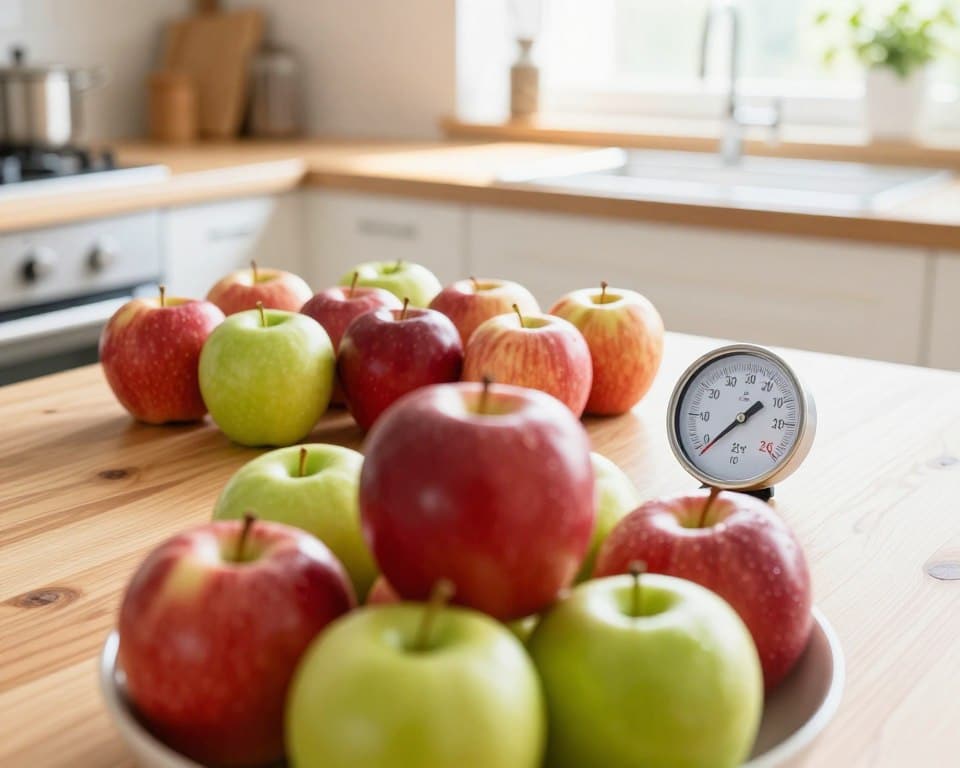
Quick answer: Keep ripe fruit at about 32–39°F with roughly 90–95% humidity.
I rely on University of Maryland Extension and University of Maine guides for these numbers — they slow ripening and keep texture and flavor longer. Cold storage limits respiration and ethylene, so apples stay crisp instead of turning mealy.
I’ll give exact ranges for chilling-sensitive varieties like Honeycrisp, show how I set a crisper drawer at home, and include a handy table with shelf-life estimates. Expect weeks for common varieties and months for true keepers when conditions are right.
Watch for signs of problems: soft spots mean warm air, and frost damage shows when it’s too cold. For a quick guide on dried fruit lifespans and related storage ideas, see how long dried fruit lasts.
Key Takeaways
- Target 32–39°F and 90–95% humidity for longest freshness.
- Colder air slows respiration and ethylene-driven ripening.
- Some varieties last weeks; keeper types can last months.
- Avoid warm spots and freezing; both harm texture and flavor.
- I’ll show simple home tips and an easy reference table next.
Best temperature to store apples for maximum freshness
A chilled shelf slows breathing in fruit, which keeps flesh firm and flavor bright.
Target refrigerator range for most fruit and why cold slows quality loss
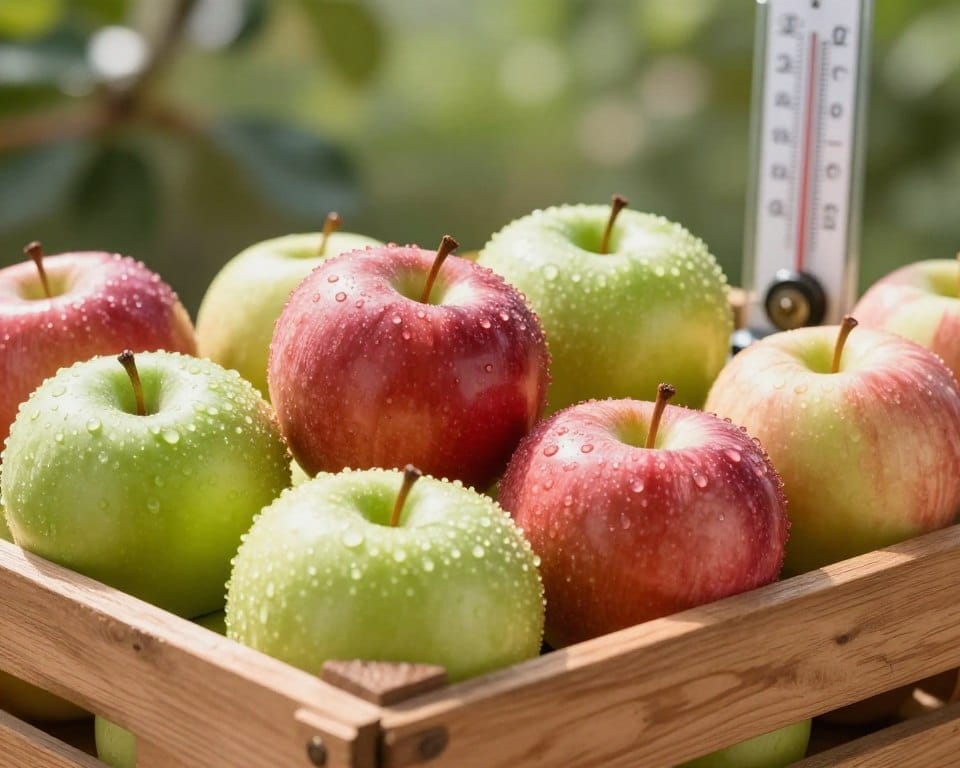
Most apples do well at about 32–39°F (0–4°C). Cold air slows respiration and ethylene release — that delays softening and flavor loss. Aim for high humidity so the skin doesn’t shrivel.
Chilling-sensitive cultivars and a safer window
Some varieties (think Honeycrisp) are chilling-sensitive. For those, use 37–39°F (3–4°C) to cut risk of soft scald and soggy breakdown. Firmer, tart types handle the colder end.
How long fruit can last at the right settings
Under good conditions mature fruit can keep for ~6 months. Partially ripe fruit lasts ~2–3 months. Fully ripe fruit often lasts less than a month. Ripeness at harvest shapes storage life most of all.
Quick reference
| Condition | °F / °C | Humidity |
|---|---|---|
| Non-sensitive varieties | 32–33°F / 0–1°C | 90–95% |
| Chilling-sensitive varieties | 37–39°F / 3–4°C | 90–95% |
| Short-term (ripe) | 32–39°F / 0–4°C | 85–95% |
Sources: University of Maryland Extension and University of Maine Extension provide the guidelines above and practical notes for home and farm storage.
How to store apples at home in a fridge, crisper drawer, or cool space
I’ll show a simple fridge routine I use for fruit that really works. Small changes keep crisp texture and slow ripening. Follow these clear checks and you’ll save taste and time!
Set up your fridge for consistent readings
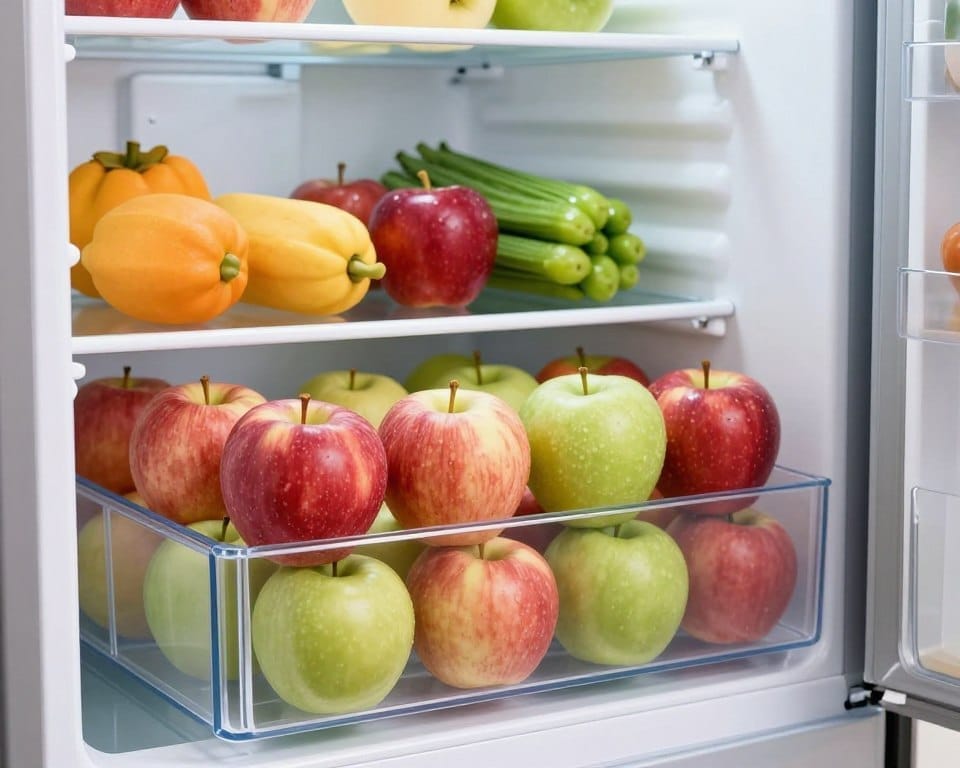
Place a fridge thermometer on the shelf or in the crisper drawer where you keep fruit — not on the door. The door warms and gives a wrong reading. Check once a day until the reading holds steady.
Hold 90–95% humidity so apples don’t shrivel
High humidity keeps water in the skin. Low humidity pulls moisture out and causes shriveling during long storage. I use a perforated bag to hold humidity while allowing some air flow.
Balance airflow, wrapping, and ethylene control
- Use perforated plastic or a loosely closed produce bag so moisture stays in and gas escapes.
- Wrap fragile fruit in paper or a towel to prevent bruising and slow rot spread.
- Keep apples separate from leafy greens and other ethylene-sensitive others — apples release a ripening gas that makes nearby produce wilt faster.
Quick routine: check weekly, remove any soft or damaged fruit, and wipe the drawer clean so one bad apple doesn’t spoil the bunch.
If you lack fridge space, use a cool room or basement. Keep the space shaded and monitored — warmer rooms shorten storage life, so check the thermometer often. For more methods and tips on how I properly handle produce, see how to properly store fresh fruits.
What changes storage life: harvest maturity, bruising, and apple variety
Storage life really starts in the orchard—when you pick sets the clock for how long fruit will last. Choosing mature-but-not-fully-ripe fruit gives you the most months of life. Overripe fruit often lasts just weeks.
Pick mature, not overripe
Mature-but-not-fully-ripe apples keep longest. Look for darker seeds, a change in the background skin from green toward yellow, and a mild taste test. If seeds are still white, wait a bit.
Simple ripeness checks anyone can do
Try a taste-test a couple weeks before your planned harvest. Check seed color and skin background. For curious growers, optional tools like a starch iodine test or refractometer give more precision.
Keeper varieties vs short-term types
Thicker skin and firm flesh usually mean apples keep through winter. Firm, tart varieties often last months; softer, thin-skinned types usually last only weeks. See a full guide on different varieties and their uses.
Watch for problems and when to discard
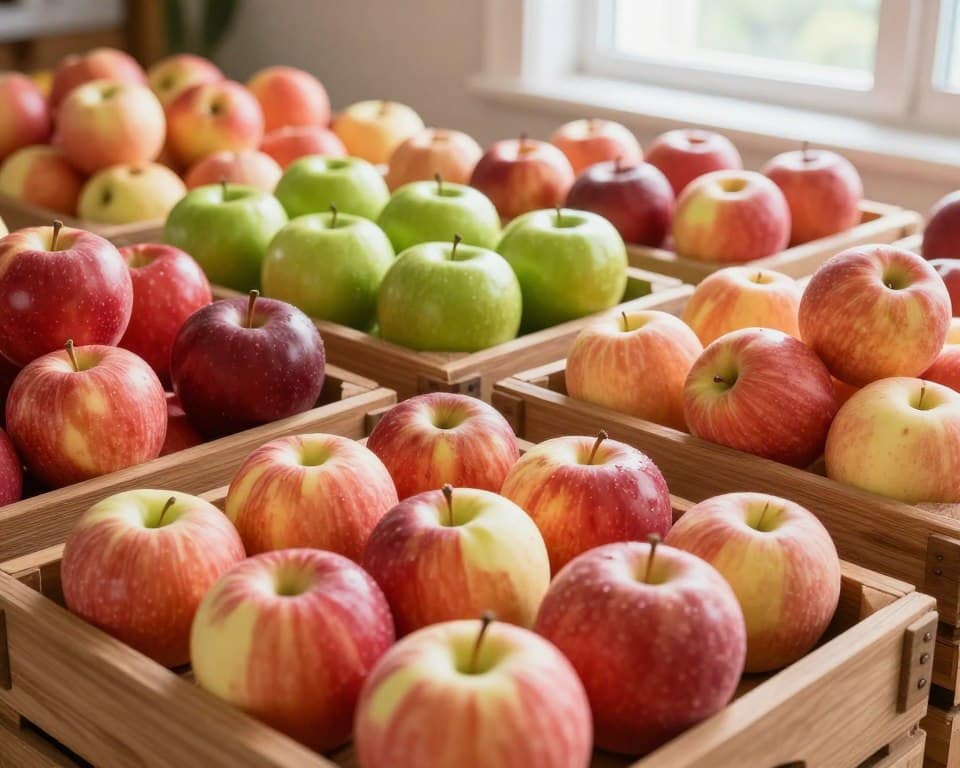
Bruises and cuts speed breakdown and spread rot. Set damaged fruit aside for immediate eating or cooking.
Rule of thumb: remove any apple with mold or a soft wet patch — one bad apple will spoil the bunch.
Cold-related disorders in sensitive cultivars
Some varieties—Honeycrisp, Gala, and others—can show soft scald or soggy breakdown in very cold storage. A brief conditioning period at about 50°F for roughly seven days can reduce those risks for Honeycrisp, but it may increase bitter pit risk. For home growers, a slightly warmer window and careful monitoring often helps sensitive fruit last longer.
| Factor | Effect on life | Home action |
|---|---|---|
| Harvest maturity | Mature-not-ripe = months; fully ripe = weeks | Use seed color, skin background, taste-test |
| Bruising & cuts | Speeds rot and shortens life | Handle gently; separate damaged fruit |
| Variety | Thick skin/firmer flesh = longer life | Know your orchard varieties; plan winter use |
Conclusion
A quick, practical wrap-up helps people act fast and protect their harvest this winter. Target about 32–39°F with 90–95% humidity — colder for hardy types, slightly warmer for chilling-sensitive ones. Those conditions slow ripening and keep quality longer.
What to do next: verify fridge readings with a thermometer, aim for high humidity using a perforated bag, and separate apples from ethylene-sensitive produce. If you have overflow in winter, consider freezing sliced fruit for smoothies and baking.
Make a weekly one-minute check: remove any soft or moldy items. See the quick reference table in this article and the University Extension guides for the source numbers. Small habits save taste and time!
Leave a Reply