
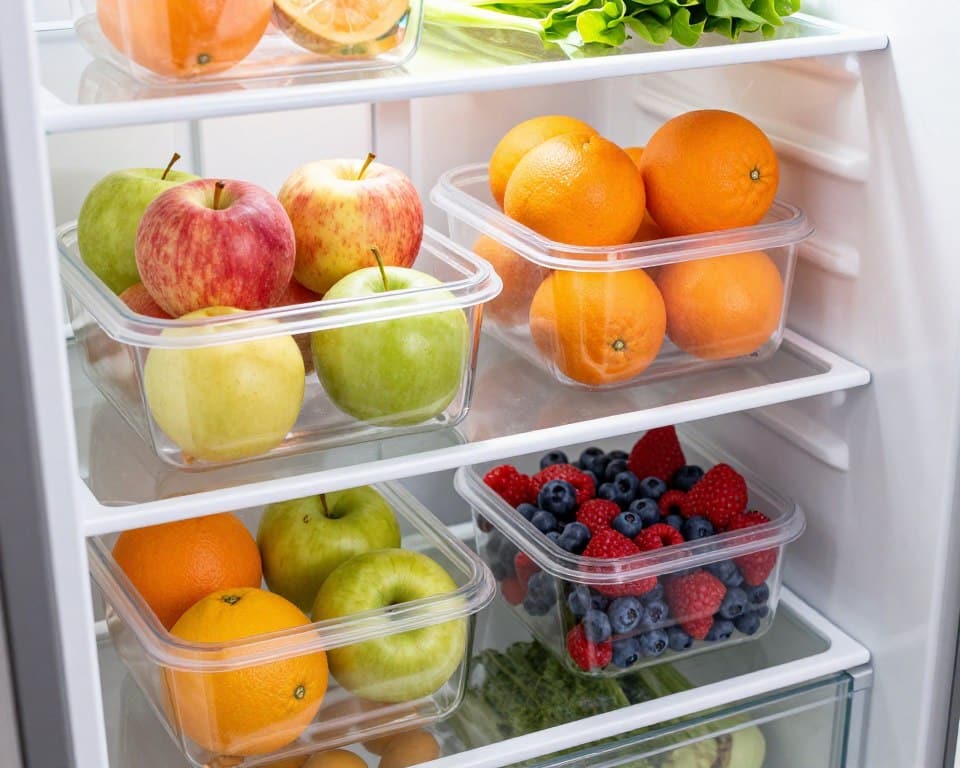
Quick answer: Sort produce, dry it fully, store airtight, and manage condensation — that simple routine kept berries and grapes fresher in my tests.
I love bright, ripe fruits that still taste great midweek — and I hate tossing moldy batches. I tested berries and grapes in three storage styles and watched what held up over 21 days.
The best approach is practical and home-friendly: use the crisper drawer, line containers with paper towel, and pick airtight containers that cut moisture. These small moves mean less food waste, fewer moldy berries, better texture, and a little saved money each month.
Stick with me — quick fixes first, then the why, then a repeatable method and fruit-by-fruit notes. You’ll get friendly, tested tips that work in a typical U.S. kitchen! 🍓
Key Takeaways
- Sort and discard damaged pieces before any storage.
- Dry produce fully; moisture fuels mold.
- Use airtight containers and paper towels in the crisper drawer.
- I tested berries and grapes for 21 days across three methods.
- Simple fixes cut waste, keep texture, and save money weekly.
Quick answer: the fastest way to keep fruit fresh longer in the fridge
When time is tight, a few quick steps can keep produce eating-ready all week. I ran a 21-day test and the winner was simple: wash, dry completely, then seal.
Fast checklist — do this tonight:
- Sort and toss any soft or moldy pieces.
- Rinse only if you will dry fully; otherwise skip washing for now.
- Lay items on a clean towel until fully dry; then transfer to an airtight container.
Why “fully dry” matters
Wet fruit plus a sealed lid breeds mold fast. Even a few droplets speed decay. Drying cuts that risk and kept berries and grapes best during my test.
What airtight means at home
Think jars with lids, lidded glass or plastic containers, or sealable tubs. The goal is minimal air exchange and no pooled water.
Moisture fixes and extras
If you see condensation, tuck a paper towel inside the lid side or lay one beneath the fruit. Flip the container slightly upside-down as an optional trick for extra drip control.
| Quick step | What it prevents | Result in 21-day test |
|---|---|---|
| Full drying | Mold growth | Best preservation across berries and grapes |
| Airtight container | Shriveling, odor exchange | Maintained texture and flavor longer |
| Paper towel / upside-down trick | Condensation | Fewer wet spots and less spoilage |
Why fruit goes bad in the fridge: moisture, microbes, and the ripening process
An easy look inside my crisper showed three honest culprits for wasted produce. These forces explain the patterns I saw during the 21-day test.
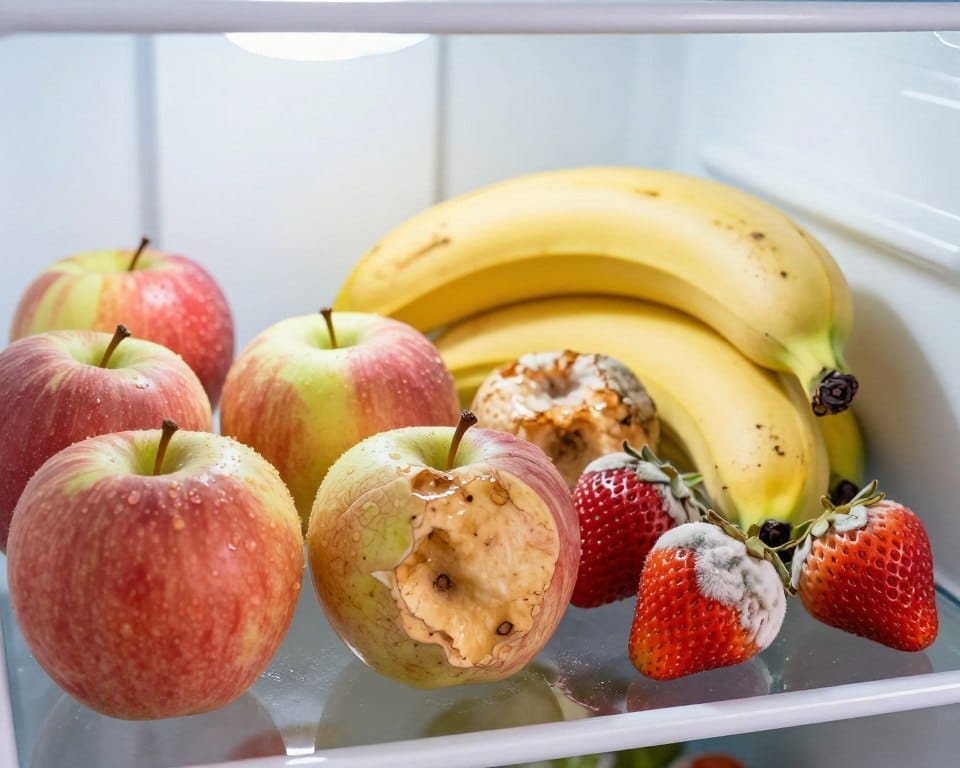
Moisture buildup speeds mold, especially for berries
Moisture pools under lids or on skins and invites fuzzy mold and sliminess. Berries show this fast — tiny wet spots turn fuzzy within days.
Ethylene gas: apples and bananas can speed ripening in nearby items
Ethylene is a natural gas some produce emits. Apples and bananas are common sources. Nearby greens and delicate berries age faster when exposed.
Practical tip: keep ethylene producers separate from greens and sensitive items whenever possible.
Temperature and airflow: what the drawer is built for
The crisper drawer gives steadier humidity and gentler airflow than open shelves. Cold alone doesn’t stop mold or shriveling — balance matters.
“Crisper drawers help manage humidity and reduce air movement around produce, which helps preserve quality.”
| Driver | What you see | What it affects | Quick fix |
|---|---|---|---|
| Moisture | Condensation, slimy stems, fuzzy spots | Berries, grapes, soft vegetables | Dry fully; add paper towel |
| Microbes | Spots, mold colonies | Many types of produce | Remove damaged pieces; keep items separated |
| Ethylene | Faster color change, softening | Greens, delicate berries, some vegetables | Store apples/bananas apart from greens |
For sources, Purdue Extension and USDA guidance back these points and match what I observed in testing.
How to store fruit to last longer fridge: the repeatable method that worked in a 21-day test
I simplified my test findings into a short workflow you can repeat on grocery day. Follow this sequence and you’ll cut spoilage and keep produce ready eat for several days.
Repeatable process:
- Sort — remove any bruised or moldy pieces; one bad berry seeds many.
- Optional wash — used in the test: 1/4 cup white vinegar in a bowl of water; soak berries ~5 minutes, grapes 10–15 minutes; rinse well.
- Dry fully — don’t stop at “mostly dry”; sealed containers trap droplets and speed mold.
- Pack — choose airtight containers for best results; leave a little headspace so items don’t get crushed.
- Monitor condensation — line the container with a paper towel and store upside down so the towel sits at the lowest point; swap towel when damp.
Why sorting matters
Remove soft or damaged pieces immediately. They break down first and spread spores fast. In the 21 days, batches with one bad item spoiled within 4–7 days.
Container comparison (21-day test)
| Method | Mold risk | Texture over 21 days |
|---|---|---|
| Unwashed, original packaging | High | Wrinkled, soft by day 7–10 |
| Washed, vented container | Medium | Raspberries held well; moderate moisture control |
| Washed, airtight container | Low | Best overall: firmer texture, less spoilage at day 21 |
Practical note:avoid overfilling plastic bags or containers. Give produce room to breathe and check towels every few days.
Best storage for berries in the fridge (strawberries, raspberries, blueberries, blackberries)
I tracked strawberries, raspberries, blueberries, and blackberries across 21 days and noted exact turning points. The single best pattern I saw was clear: wash produce (optional), dry completely, then seal airtight. That routine cut mold and kept texture much better than vented or original packaging.
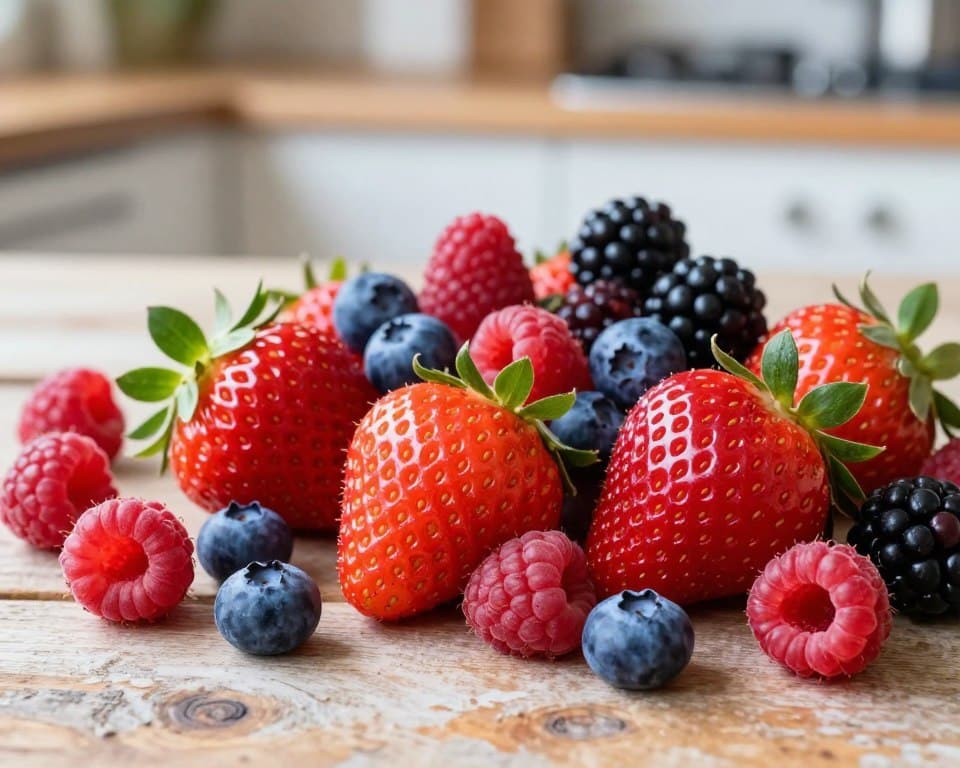
Strawberries — eat within about a week
Strawberries declined fastest in all setups. Unwashed berries got soft and shriveled quickest; even when mold wasn’t visible, texture and flavor dropped by day 7. Pack with caps on and use within seven days for best taste.
Raspberries — airtight surprised me
Raspberries in vented containers molded first during the test. The washed, fully dried, airtight batch looked nearly new at day 21. Single-layer packing and gentle handling made a big difference.
Blueberries — texture that lasts
Unwashed blueberries showed wrinkles and softness around day 5. The airtight group stayed firm and even a bit crunchy at day 21. Keep moisture out and avoid overfilling the container.
Blackberries — control moisture, remove leakers
Blackberries were the most mold-sensitive when wet. Airtight storage with a dry lining had no mold or mush at day 21. Toss any leakers fast and swap a damp towel when needed.
- Quick checklist: remove soft pieces, avoid crushing layers, dry fully before sealing.
How to store grapes so they stay crunchy longer
A simple routine made the biggest difference in my 21-day test. Unwashed grapes went soft and wrinkly by day 5–6. The batch that had a vinegar-water soak and careful drying stayed crisp through day 21.
Vinegar-water soak plus thorough drying
I soaked grapes about 10–15 minutes in a bowl of water with ~1/4 cup vinegar, then rinsed and dried them well. That step reduced microbes and debris, and real drying stopped trapped moisture from inviting mold.
Sort, de-stem, and toss weak ones
Remove grapes from the vine and discard any that are wrinkled, have split skins, feel sticky, or leak. De-stemming helps — it reveals hidden soft spots and reduces moisture pockets.
Best containers and serving tip
Use an airtight container for the main batch in the fridge; this kept the best texture at day 21. Keep a small snack portion in a separate sealed tub so the big batch stays closed most of the time.
- Grocery-day routine: sort → soak (optional) → rinse → dry → de-stem → store airtight.
- What to toss: wrinkled grapes, split skins, sticky or leaking pieces.
| Step | Why it helps | Observed outcome (21-day test) |
|---|---|---|
| Unwashed, no prep | Trapped debris and moisture | Soft/wrinkly by day 5–6 |
| Vinegar-water soak + dry | Reduced microbes; no surface moisture | Crisp texture maintained at day 21 |
| Airtight container | Less air exchange; fewer raisin-like grapes | Highest quality at day 21 |
Set up your fridge for produce storage: drawer placement, airflow, and separation
A tidy fridge layout makes a huge difference for produce that stays fresh and tasty. A few simple placement rules cut spoilage and keep snacks ready.
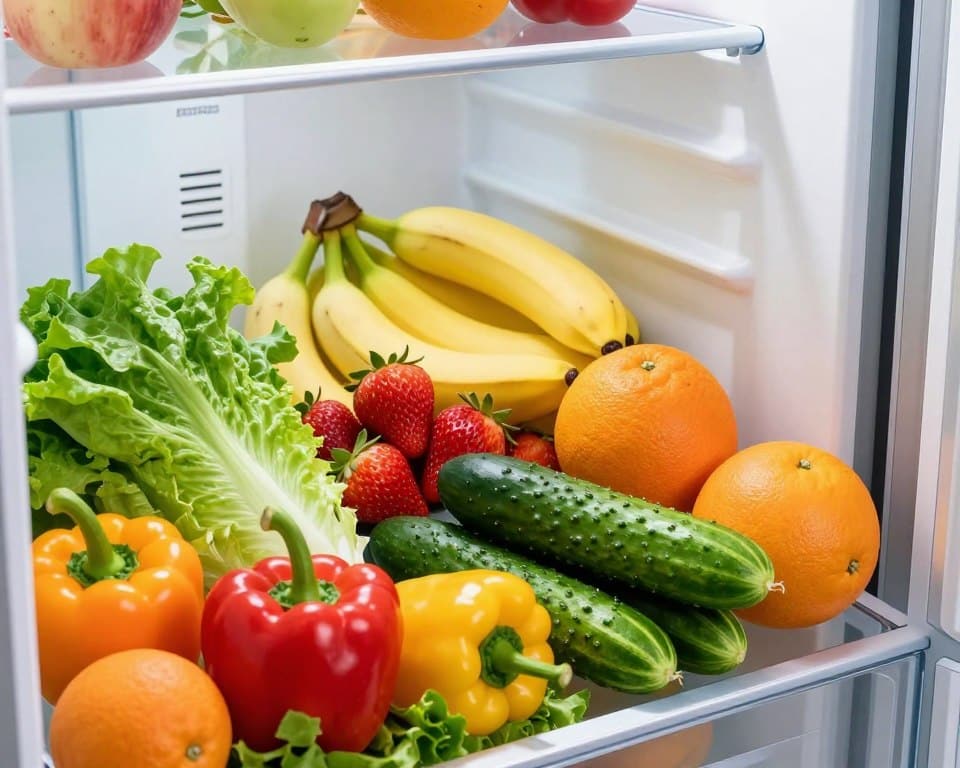
Use the crisper drawer for most fresh produce
Crisper drawers give steadier humidity and lower direct airflow than shelves. That helps many fruits and vegetables keep texture and moisture balance. Cornell Cooperative Extension notes drawers manage humidity in ways open shelves cannot.
Separate ethylene producers from sensitive items
Keep apples and bananas away from greens, berries, and most veggies. Ethylene speeds ripening—so a simple split slows waste. Put ethylene-heavy items in one drawer or on the top shelf, and sensitive items elsewhere.
Practical layout and safety tips
Map your fridge: crisper for produce, upper shelves for cooked leftovers, bottom area far from raw meat drips. Don’t leave produce uncovered under vents where cold air blasts and dries it out.
Pantry exceptions: potatoes and onions prefer a cool, dark, ventilated counter or pantry—not the moist drawer.
For a short guide on proper handling and placement, see this page on proper produce handling.
Washing and food safety: what to do now vs what to wait on
I’ll keep this simple and practical — safe cleaning matters, but so does timing. The USDA says rinse produce under running water and skip soap. For firm items, scrub gently with a clean brush when needed.
USDA basics you can trust
Use cool running water. Do not use soap or detergent. Scrub firm vegetables and firm fruits when dirt hides in crevices. These steps reduce surface grime and lower food safety risk.
Wash now or wash later?
If you cannot dry items fully, wait and wash right before eating. Extra water on stored produce raises moisture and speeds spoilage — especially on delicate berries. That was clear in my 21-day test.
Practical compromise for busy weeks
Prep only what you can dry completely and seal. Wash a snack portion for ready eat use, and keep the main batch dry until you can handle it. If you try a vinegar soak (optional in my test), rinse well and dry thoroughly — rinsing and drying matter most.
Food safety note: discard any produce with visible mold. Soft items can hide mold threads beyond the surface and are not safe to rescue.
Conclusion
The biggest win from my experiments was plain and repeatable: dryness plus a tight lid. That routine kept many fruits crisp through 21 days and helped me cut food waste — a real nudge against the 40% of produce that gets tossed nationwide.
Do this, not that:
• Sort damaged pieces. • Dry fully. • Seal in an airtight container. • Manage condensation with a paper towel. • Separate ethylene producers from delicate produce.
Note: strawberries still lose texture fastest, so I plan them first. Check containers for any drip and swap the towel when damp.
Small steps like these are an easy way to keep fresh snacks, save money, and make produce life happier. For a quick guide on what to drop, see drop stored fruits.
Leave a Reply