
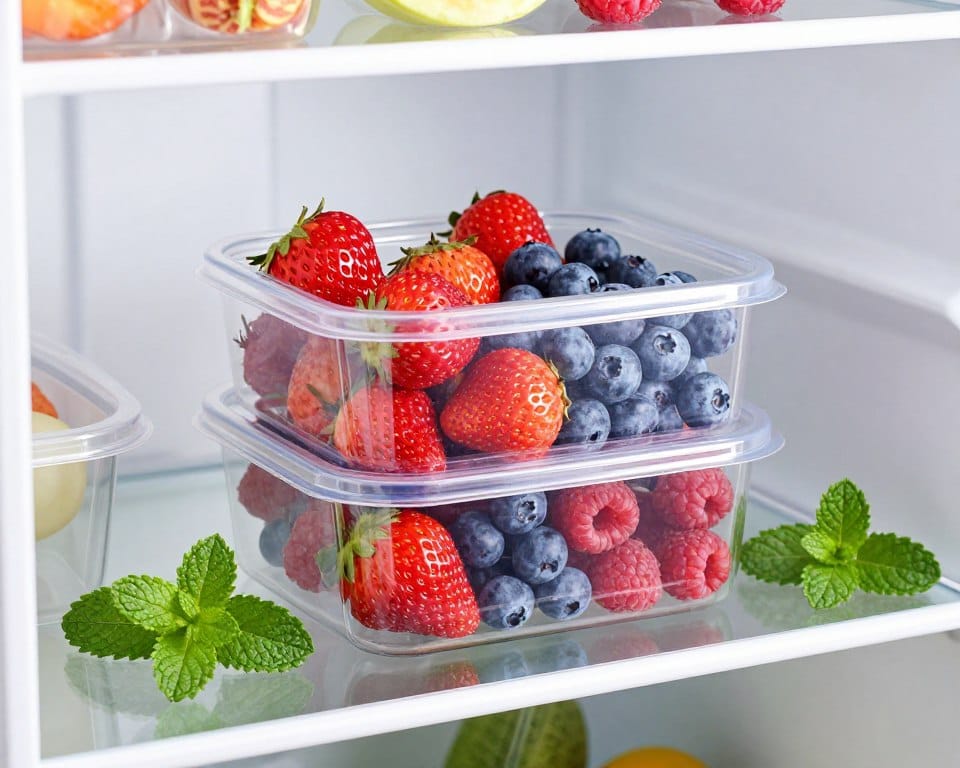
I say the quick answer up front: a vented produce keeper with a raised insert or a wide, shallow bin lined with paper towels and a loose lid gives the best container for berries in fridge. These choices cut moisture pooling, boost airflow, and stop crushing.
I love fruit and I want you to save time and waste. Berries bruise fast; one soft berry can spoil the bunch. Toss any slimy or mushy pieces right away to protect the rest.
What to look for: a raised tray to lift fruit away from moisture, vents to let air move, and a shallow shape to prevent stacking that squashes fruit. Avoid airtight seals that trap humidity—especially if one berry is already turning.
I’ll preview top picks for small fridges, mixed produce, and berry-only bins, and I’ll share a quick DIY trick you can use today. If you want details fast, check the quick answer list next and this guide on how long dried fruit lasts here.
Key Takeaways
- Choose a vented keeper or shallow bin with paper towels to reduce moisture.
- Remove bruised fruit immediately to keep the rest fresh longer.
- Avoid airtight storage—berries need airflow, not trapped humidity.
- Place containers away from the coldest fridge corner to lower frost risk.
- You can DIY a shallow tray with paper towels if you’re on a budget.
Quick answer: what to buy to keep berries fresh longer
Here’s a short shopping guide to keep your fruit fresher longer. I picked options that cut moisture, add airflow, and stop crushing. Each pick lists who it suits and one trade-off.
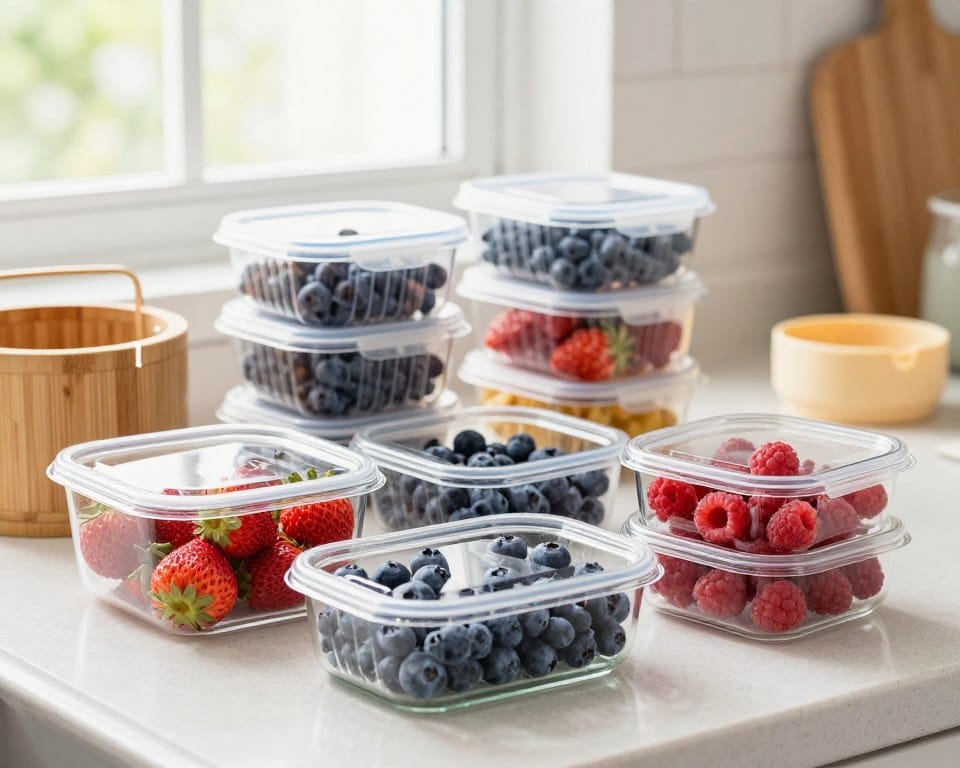
- Best overall — OXO Good Grips GreenSaver: removable colander, carbon filter (about 90 days), adjustable vents, raised tray keeps fruit out of pooled juice. Trade-off: slightly pricier.
- Best berry basket — iDesign Recycled Berry Bin: permanent vent + drainage basket; great for firm blueberries. Trade-off: not dishwasher-safe; cut fruit may dry faster.
- Small-fridge pick — Lille Home Stackable Bins: stackable, vents, removable colander; freezer- and dishwasher-safe. Trade-off: smaller capacity.
- Big loads — PrepWorks Progressive Keeper: vent dial and drip tray; roomy for mixed produce. Trade-off: bulky on shelves.
- User-friendly set — Tupperware FridgeSmart: three-position vent, durable, dishwasher-safe, nests for storage. Trade-off: no drainage.
- DIY now: wide, shallow bin + paper towel + loose lid. Quick, cheap, and effective for short trips from the grocery store.
| Pick | Key feature | Who it’s for |
|---|---|---|
| OXO GreenSaver | Carbon filter + raised colander | Most households who want longevity |
| iDesign Berry Bin | Drainage basket, permanent vent | Berry-only fans, firm fruit |
| Lille Home Bins | Stackable, vents | Small fridges, tight spaces |
| PrepWorks Keeper | Drip tray, large capacity | Mixed produce loads |
| Tupperware FridgeSmart | Three-position vent, durable | Users who want a neat set |
My pick: I’d buy OXO for most homes and iDesign if I kept only berries like blueberries and strawberries.
How berries spoil in the refrigerator
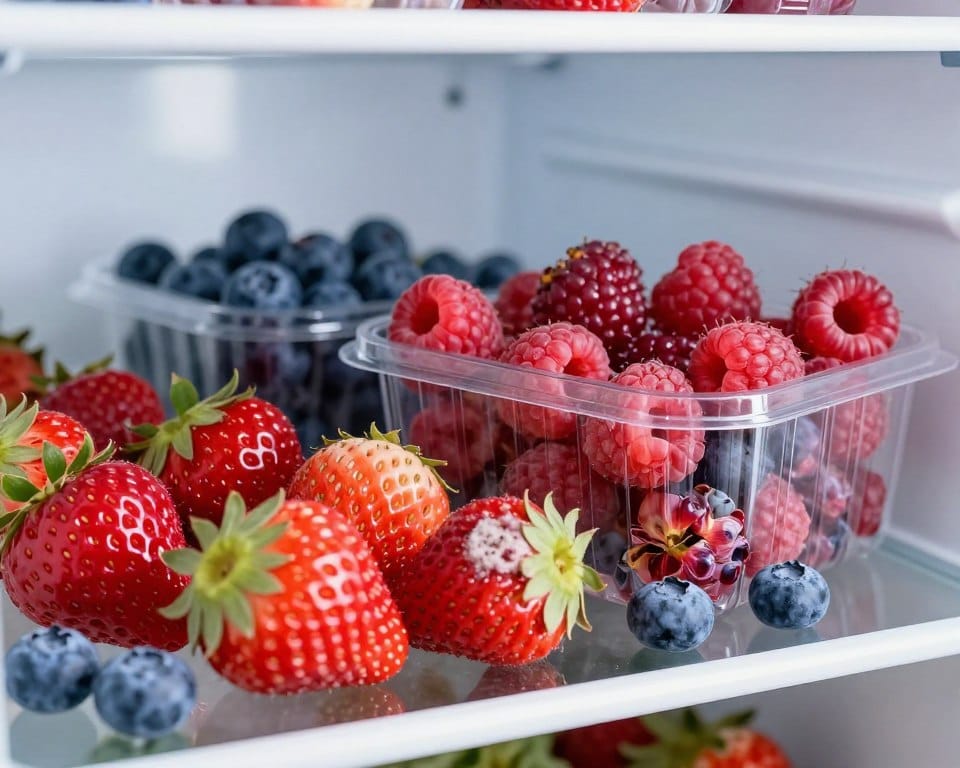
A few weak spots can ruin a whole pint of fruit. I see it all the time with strawberries and raspberries. Thin skins bruise easily. Then mold moves in fast.
Mold spreads fast in thin-skinned fruit like strawberries and raspberries.
- One fuzzy berry can seed mold on the rest. Strawberries and raspberries lose the fight first.
- Blueberries hold up longer because of firmer skin.
Moisture and trapped humidity speed soft spots and rot.
Pooled juice creates a humid microenvironment. Sealed tubs can lock that moisture and feed mold. That speeds decay and shortens shelf life.
Crowding, ethylene, and placement matter.
- Crowding crushes fruit and makes soft spots faster.
- Some produce gives off ethylene gas; nearby fruit can ripen and break down sooner.
- Avoid the coldest corners of the fridge to lower frost risk and mealy texture.
Quick habit I use: scan a pack when I get home. Remove any soft or fuzzy pieces right away. That tiny step saves lots of produce and grocery money.
What to look for in the best container for berries in fridge
Good ventilation and simple moisture control make a huge difference when you store fragile fruit. I focus on features that actually stop juice pooling and crushing—those two issues ruin a pint faster than anything else.
Airflow features that matter
- Adjustable vents: let you tune airflow for delicate vs firm fruit.
- Permanent vents or raised baskets: keep produce off wet surfaces; iDesign uses a permanent vent that works well.
- Raised inserts: lift fruit away from any liquid and boost air circulation.
Moisture control that prevents soggy fruit
You want berries dry, not dehydrated. Vents and drip trays balance that—PrepWorks has a drip tray that channels juice away from fruit.
Drainage inserts vs flat-bottom bins
If fruit sits in juice, spoilage speeds up. Go with a raised colander or insert rather than a flat-bottom bin unless you line it with paper towel.
Lid fit and why airtight can backfire
An airtight lid traps humidity and speeds mold if one piece is questionable. A vented or slightly loose lid helps moisture escape and keeps produce fresher.
Material choices: plastic vs glass
BPA-free plastic is light and common for produce savers. Glass is inert and easy to clean but heavier and can fog. Pick what you’ll actually use regularly.
Size, shape, cleaning, and maintenance
- Shape: wide and shallow reduces crushing and crowding.
- Cleaning: dishwasher-safe parts get cleaned more—Lille Home is dishwasher-safe; some pieces need hand washing.
- Filter swaps: OXO’s carbon filter should be replaced about every 90 days to keep odors and gas in check.
Product picks and reviews for berry storage containers
I judged these picks by airflow, moisture control, low-crush shape, and cleaning ease. Below are quick, factual notes and a compact comparison to help you choose fast.
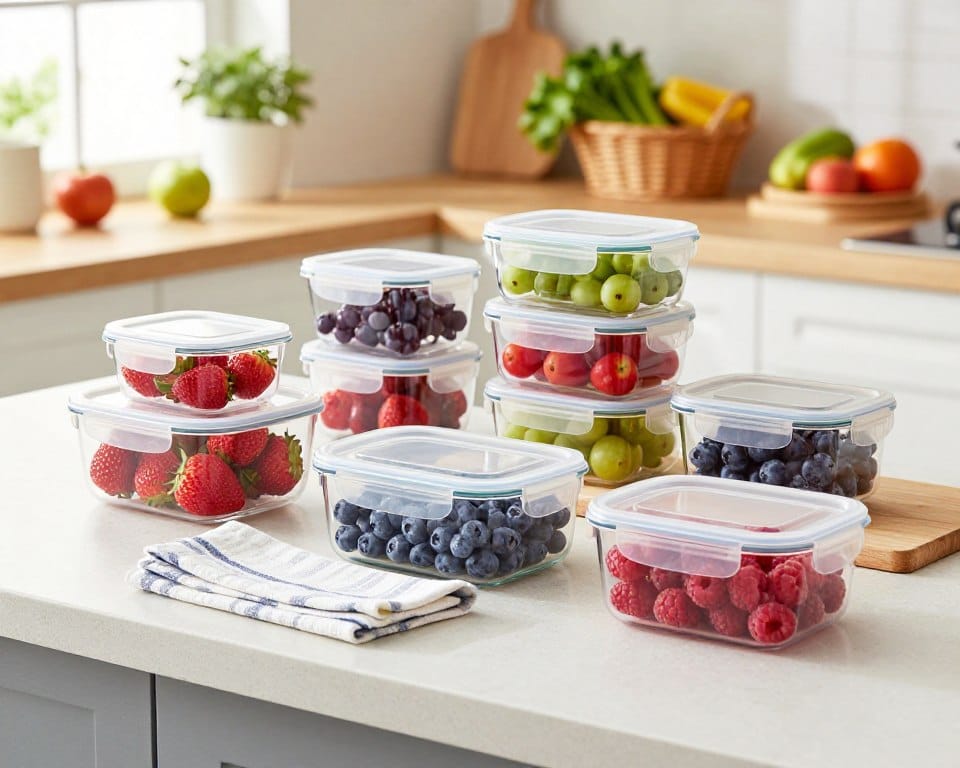
OXO Good Grips GreenSaver Produce Keeper
Why it stands out: removable colander and raised insert lift fruit away from pooled juice. The carbon filter reduces ethylene and should be swapped about every 90 days.
Who should buy this: households that want long-lasting produce storage and easy vent guidance.
iDesign Recycled Plastic Berry Basket Bin
Why it stands out: BPA-free recycled plastic, permanent vent, and a drainage basket. Taste of Home-style testing showed no spoilage after 10 days.
Note: hand wash recommended due to finish.
Who should buy this: berry basket fans who store firm blueberries or strawberries and prefer eco materials.
Lille Home Stackable Produce Saver Bins
Why it stands out: stackable, adjustable vents, removable colander; freezer- and dishwasher-safe.
Who should buy this: small-fridge kitchens that need a space-saving set.
PrepWorks Progressive Lettuce & Produce Keeper
Why it stands out: wheel-style vent and a removable drip tray that catches liquid. Big footprint—great for mixed lettuce and veggies.
Who should buy this: families that store larger loads of produce and want moisture control.
Tupperware FridgeSmart System
Why it stands out: three-position vent, sturdy build, nests for storage and is dishwasher-safe. No drainage—dry fruit well before storing.
Who should buy this: busy homes that want a durable, low-maintenance option.
| Model | Vents | Drainage Insert | Dishwasher-Safe | Footprint / Ideal use |
|---|---|---|---|---|
| OXO GreenSaver | Adjustable + carbon filter | Yes (raised colander) | Some parts | Medium / longevity-focused produce saver |
| iDesign Berry Bin | Permanent vent | Yes (drainage basket) | No (hand wash) | Small / berry basket, firm fruit |
| Lille Home Bins | Adjustable vents | Yes (removable colander) | Yes | Small / tight fridges, stackable set |
| PrepWorks Keeper | Wheel-style vent | Yes (drip tray) | Some parts | Large / mixed lettuce and veggies |
| Tupperware FridgeSmart | Three-position vent | No | Yes | Medium / durable kitchen staple |
Best practices that make any container work better
Begin with a smart pick at the grocery and follow a few quick steps at home. I use a short routine that saves time and cuts waste.
- Pick and sort: at the grocery store choose firm, plump fruit. Toss any stained or leaking cartons. Remove bruised pieces right away so one bad berry won’t ruin the rest.
- Vinegar rinse: mix 3 cups water with 2 Tbsp white vinegar. Swirl berries briefly, then rinse under cool water.
- Dry by hand: gently pat-dry each berry with a towel. Drying is the make-or-break step—wet fruit invites mold.
- Line and lid: use a wide, flat dish lined with a paper towel. Cover with a loose or vented lid so moisture can escape; airtight lids trap humidity.
- No crowding: one shallow layer beats deep piles. Avoid stuffing fruit into bags that press and bruise strawberries or blueberries.
“A quick check every day keeps snacks ready—remove soft pieces and store the rest dry.”
For more on how long blueberries last, see this guide: how long blueberries stay good. Small habits make storage work every time.
DIY setups vs produce savers: when each makes sense
Let’s match your shopping and storage habits to the right way to keep fruit fresh. I keep it simple: pick the method that fits how often you buy and how much you eat.
Quick decision rules:
- If you buy small amounts weekly, a wide tray with a paper towel and a loose lid is an easy, low-waste way to store and saves washing extra parts.
- If you buy in bulk or want longer life, a vented produce saver with a raised insert helps airflow and keeps food drier.
- If you see even a hint of mold, remove those pieces and skip sealing the rest in a saver—eat them fast or freeze them.
Why sealed glass jars and sealed bags can backfire
Airtight glass jars and sealed bags can trap humidity and hold gases. That creates a very humid pocket that speeds over-ripening and mold growth. If you want a test, read about storing strawberries in glass jars.
Low-waste add-ons and a freezer plan
Slip a FreshPaper sheet into a tray to slow spoilage. Use reusable silicone bags when freezing.
Freeze on a tray first—spread fruit single-layer, freeze until solid, then move to a bag and press out air. Properly packed, frozen fruit keeps best quality about 6–12 months.
Conclusion
Keep this simple: ventilation plus moisture control wins every time.
Pick a vented bin with a raised insert, or go DIY—use a wide, shallow tray lined with paper towel and a loose lid. That combo cuts pooled liquid, boosts airflow, and reduces crowding, so your produce keeps longer.
The biggest enemies are moisture, crowding, and hidden mold. Control those and you protect flavor, texture, and shelf life.
Quick shopping-to-fridge checklist: buy firm fruit, sort fast, dry by hand, store shallow, and vent the lid. Upgrade to a dedicated saver if you shop often, feed a family, or hate wasted food.
Freezer tip: tray-freeze single-layer, then bag and label the date—fruit can keep 6–12 months that way.
One small habit today—dry and sort at unpacking—saves time and cuts waste. Happy snacking!
Leave a Reply